Any Well. Any Configuration.

Upgrade heavy oil
at the source.

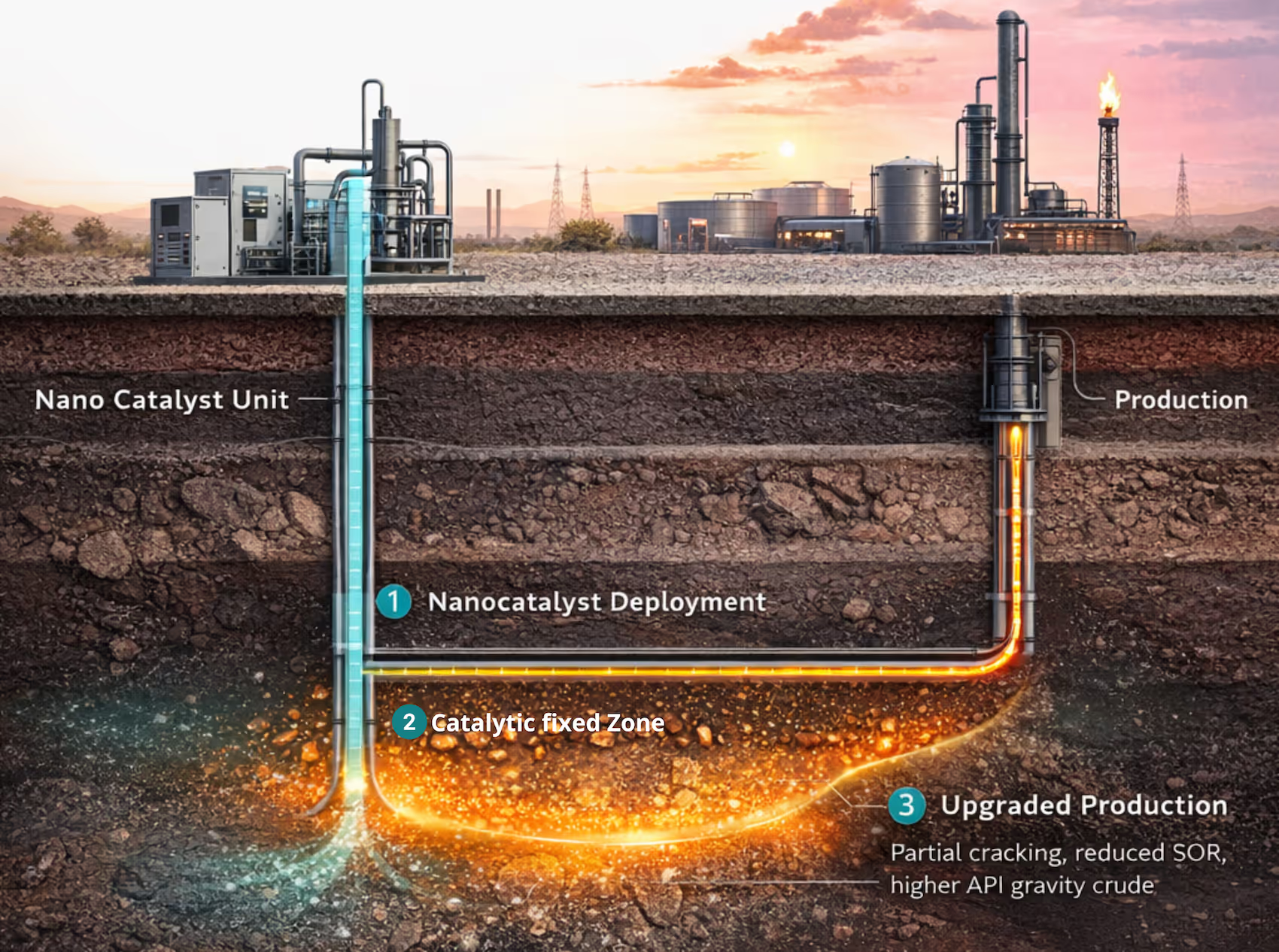
ISUT® puts a permanent catalytic upgrading zone inside the reservoir itself. It works across vertical, horizontal, multi-lateral and hybrid heavy oil wells. One nanocatalyst injection. Lighter crude, higher recovery, lower production cost. No surface modifications needed.

ISUT® in-reservoir catalytic upgrading process illustration
In-reservoir catalytic upgrading process
The challenge

Heavy oil doesn't fail on reserves. It fails on economics and emissions.

Every heavy oil producer faces the same wall, regardless of well type or recovery method. Mobility problems, rising costs and tightening market access all get worse as assets age. More optimization won't fix that.

High viscosity holds back production in every well type Whether you run vertical CSS, horizontal SAGD or multi-lateral wells, viscosity is what limits recovery. Conventional approaches deal with it at surface. ISUT® removes the problem before oil ever leaves the ground.
Diluent costs eat into margins on every barrel Heavy crude needs condensate blending to reach pipeline spec. That costs money on every barrel and ties your margins to condensate prices, whether you run vertical or horizontal wells.
Poor reservoir conformance leaves bitumen stranded Uneven rock bypasses bitumen in both vertical and horizontal wells. ISUT® works at the reservoir level to improve sweep and reach oil that conventional methods miss.
Why ISUT® changes the equation
40%
Reduction in steam-to-oil ratio. The same steam capacity moves more barrels.
35%
Less diluent per pipeline barrel. Higher netbacks, less exposure to condensate prices.
10%
Incremental recovery from the same well pair and surface footprint
How it works

Three steps. One reservoir-integrated system. Any well, any configuration.

A nanocatalyst goes in once and permanently anchors to rock inside the reservoir, building a long-life catalytic zone that upgrades crude continuously. It works across vertical, horizontal, multi-lateral and hybrid thermal wells. One injection. No new surface infrastructure.

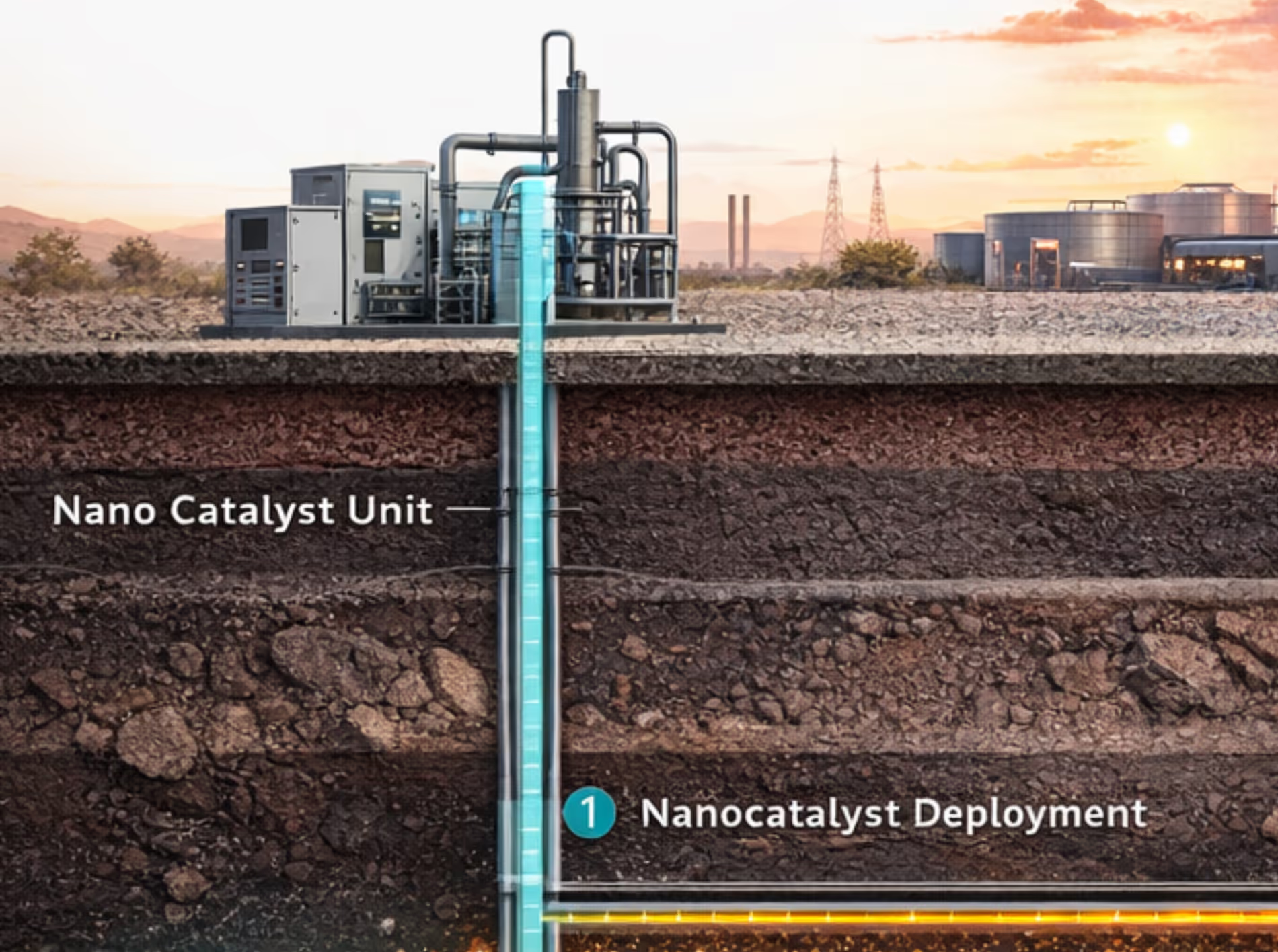
NanoCatalyst Injection: nanocatalyst particles anchoring to reservoir sand grains
01
Step 1

NanoCatalyst Injection

A nanocatalyst is injected during early steam or thermal operations. It disperses through the reservoir and permanently anchors to rock surfaces along the flow paths, establishing a stable catalytic zone underground.

70 to 100 nm particles, smaller than pore throats (1,000+ nm)
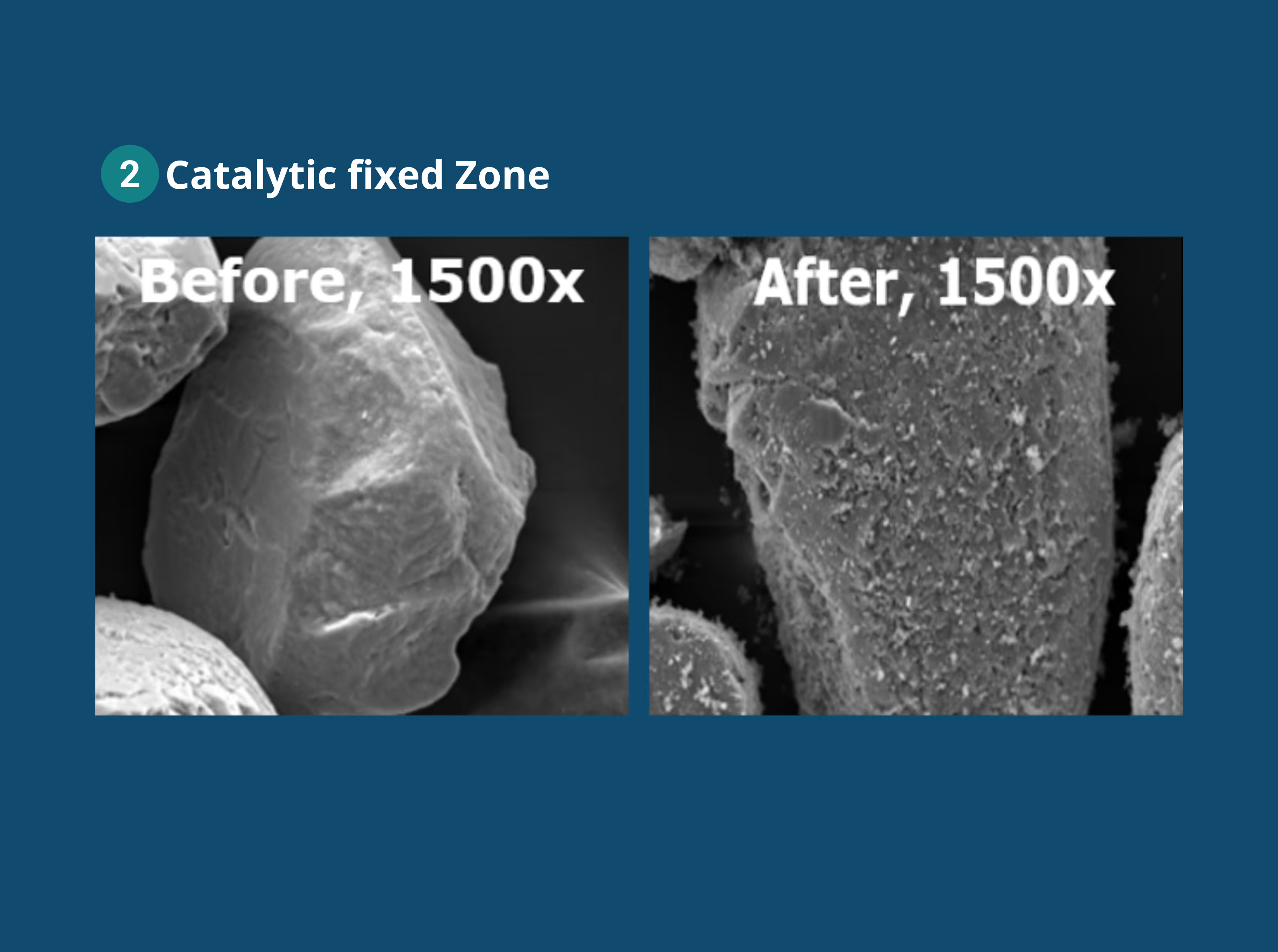
Catalytic Fixed Zone: heavy fractions cracking into lighter components
02
Step 2

Catalytic Fixed Zone

As heated fluids pass through the catalytic zone, heavy fractions crack into lighter components. Viscosity and density drop. Mobility improves. API gravity rises before the oil reaches surface.

*Catalyst anchoring observed along steam-influenced rock surfaces in controlled laboratory testing.

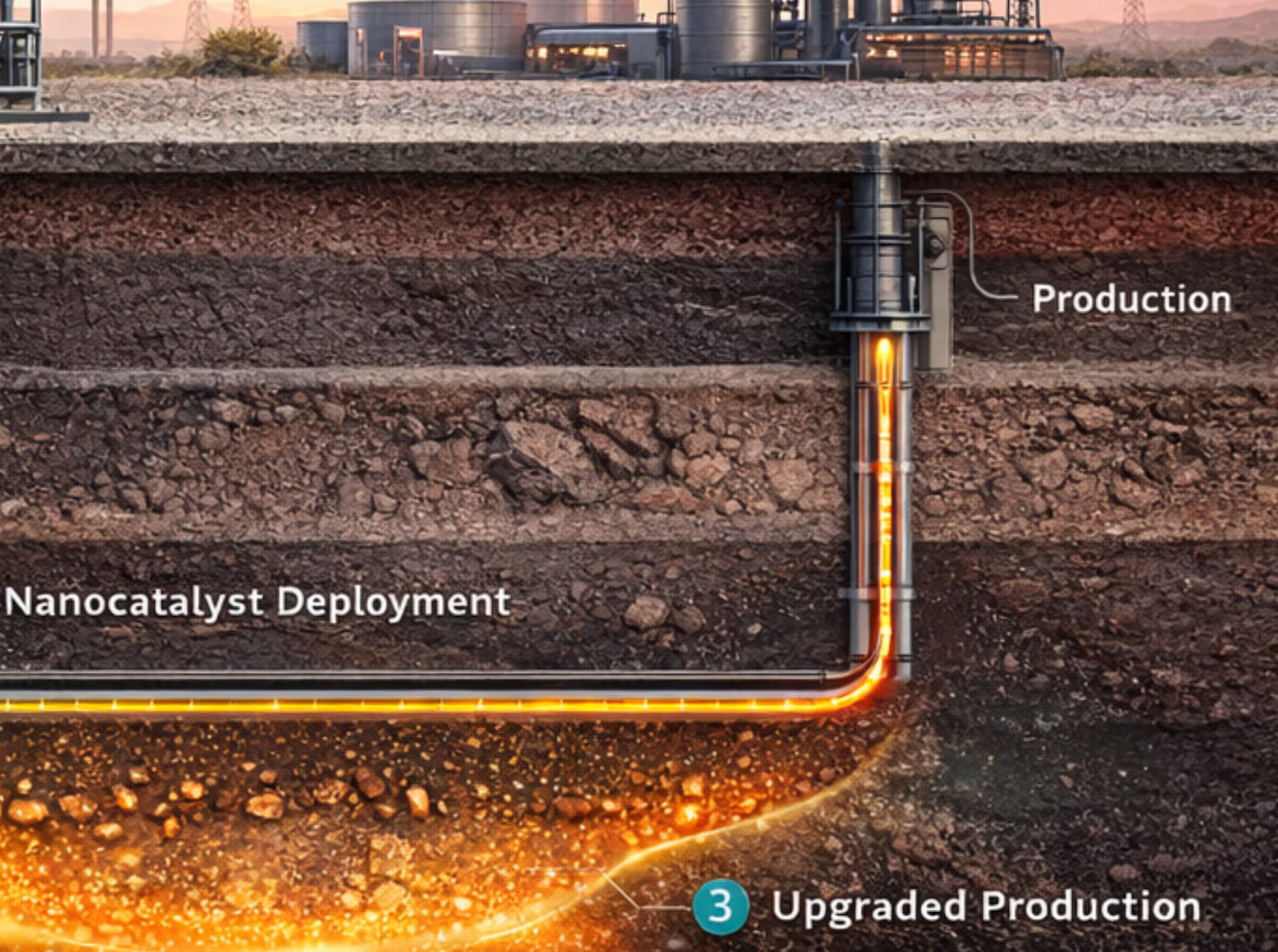
Upgraded Production: lighter higher-API crude produced to surface
03
Step 3

Sustained Performance

Better mobility, improved heat retention and lighter fluid quality work together inside the reservoir. Steam demand falls. Diluent use drops. Recovery climbs. The well produces more stable, higher-value crude for the duration of its life.

Continuous upgrading. Life-of-well benefit from a single injection.
Deployment configurations

Engineered for any well architecture.

ISUT® works with the well configurations already in place. One catalyst injection forms a permanent catalytic zone. Upgrading runs continuously from there, through every production cycle regardless of recovery method.

Cyclic Steam Stimulation

CSS — Vertical & Single-Lateral (Huff-and-Puff)

Catalyst is injected during a pre-steam or early steam cycle and anchors to rock surfaces around the wellbore. Subsequent cycles run as normal. The catalytic zone is already there, upgrading continuously.

  • Higher recovery per cycle from improved mobility and sweep
  • Lower viscosity and reduced steam requirement per barrel
  • Improved lifting efficiency and access to tight or lower-permeability zones
Steam-Assisted Gravity Drainage

SAGD — Horizontal Well Pairs

Catalyst is placed along the horizontal injector well and builds a catalytic zone along the steam chamber interface. Upgrading runs continuously as bitumen drains to the producer. Existing SAGD workflows stay the same.

  • Lower steam-to-oil ratio and reduced energy intensity
  • Faster chamber development and more stable long-term production
  • Higher API gravity and reduced diluent blending requirements
Hybrid Thermal / Solvent / Pressure-Drive

Hybrid Systems

Catalyst is placed with a hydrogen source or hydrogen-lean gas and pairs well with solvents and low-pressure drives. Catalytic cracking makes solvents more effective and pushes upgrading into lower operating temperatures.

  • Additional light-end generation improves mobilisation efficiency
  • Solvents work better because of in-situ catalytic cracking
  • Extends viability of marginal or end-of-life assets
Multi-Lateral & Extended-Reach Wells

Multi-Lateral Architecture

Catalyst anchors along lateral branches and builds catalytic zones at each drainage point. This works particularly well in low-pressure areas or reservoirs with variable geology across large footprints.

  • Improved sweep efficiency across extended reservoir footprints
  • Better conformance in variable geology and lower-quality rock
  • Continuous in-situ upgrading along every active drainage point
Field performance

The data behind the technology.

Sensitivity testing across low, mid and high-intensity operating scenarios shows ISUT® performs reliably regardless of well length, injection rate or reservoir pressure. The data here comes from SAGD, the most energy-intensive thermal configuration. The same catalytic mechanisms produce similar gains in CSS, hybrid, multi-lateral and pressure-drive settings.

Reservoir upgrading, SAGD simulation

API Gravity Over Time

ISUT® cracks vacuum residue into lighter hydrocarbons underground, raising API gravity over time. Conventional SAGD stays flat. CSS and hybrid configurations show similar API gains.

Diluent reduction, SAGD simulation

Diluent Requirement Over Time

Lighter oil needs less condensate to meet pipeline spec. Demand drops sharply once ISUT® is active, across any well type.

Get in touch

Ready to evaluate ISUT® for your wells?

Download

Get the full technology brief

The ISUT® technology brief covers catalyst design, the two-phase process, performance data across configurations, and commercial economics.

Talk to us

Have a specific reservoir or configuration in mind?

Whether you run CSS wells, SAGD pairs, multi-laterals or hybrid systems, and whether you're looking at a pilot or full-field deployment, we'd like to understand your reservoir.